
“the first thing I wrote that showed any kind of promise” -Agatha Christie, speaking of “The House of Beauty”
There is a haunted house I dream of regularly, and in great detail. I do not have duplicate or “recurring” dreams in a strict sense, but the architecture of my dreams is often fixed—there is a haunted house that I could draw technical specs of, a high school that I have never been to, a concert hall that doesn’t change. When I was a little kid, I thought this was a widespread feature of dreams, to the extent that when I read about lucid dreaming as a teenager I worried that somehow I was going to real places while asleep. Otherwise, how did the places remain unchanged?
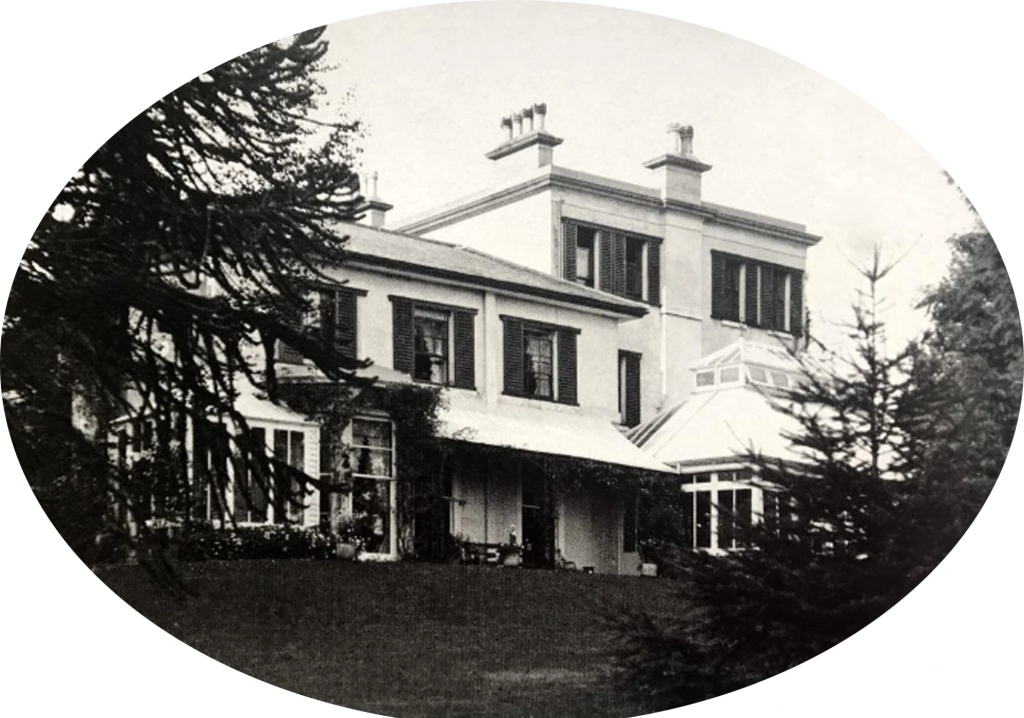
Now more grounded in reality as an adult, I appreciate the neurotic detail of my mind, and can also play with the features of these worlds, much like Ariadne in “Inception” flipping a building on its spine to create an Escher-like landscape. The haunted house that I dream about several times a year has filled-in windows concealed on the inside by heavy scarlet drapes. Pulling back the drapes reveals either a ghost or a painting, depending on the floor you are on. The third floor, which is poorly furnished and accessed by a rickety art deco elevator, contains more malicious spirits than art. I had this dream for years and somehow knew the house was related to a personal trauma and its accompanying shame. Even when the ghosts were behind the drapes, I felt their seething rage, their desire to consume me. The haunted house appeared in a dream shortly before my partner and I had a cross-country move, but in this version (perhaps due to packing up in real life), my therapist was helping me price the house’s furniture and paintings for auction. In the dream, I told my therapist “everything must go” and if that isn’t something that would make Jung very happy, I don’t know what is. I was ready to literally and figuratively move on and tear down my fears and shame.
These dreams primed me1 to enjoy Agatha’s early story, “The House of Dreams,” (published in1926 but based on an earlier story, “The House of Beauty”), in which John Segrave2 has a repetitive dream of a mysterious house before, during, and after encounters with the beautiful and mysterious Allegra Kerr. “The House of Beauty” (written c. 1908-1910, when Agatha was 18 years old) is lost to the annals of history in its original form. But I have good reason to believe it was altered very little when published as “The House of Dreams.” It still has the clunkiness of Agatha’s early writings, much of the language is repetitive to the point of being irksome, and it would have benefitted from firmer editorial guidance (for example, there is a passage in which it is not clear which of the protagonists are speaking). Lastly, the word “beauty” occurs in “The House of Dreams” a whopping 14 times in 20 pages:
“…its presence in that House—the House of Beauty. For where that Thing abode was horror—horror that rose up and slew the peace and serenity which were the birthright of the House. The beauty, the wonderful immortal beauty of the House…”
You get the idea! All capitalizations are from the original. It truly harkens back to Poe’s horror stories like “The House of Usher” and “The Facts in the Case of M. Valdemar” in theme and tone. Unfortunately “The House of Dreams” is not available in the public domain until 2026, but you can enjoy its macabre magnificence for less than a dollar here. Content warning: suicide, mental illness.
I would love to hear your thoughts after reading, and will not spoil the ending for you. I AM curious about your interpretation of “Threshold” in the last line of the story, and whether it portends John’s happiness or torment. Does he ever end up with Allegra? Also for all you Hamilton fans: I could not help but think of poor Peggy Schuyler every time Maisie came on the scene.. Even Maisie’s name is clunky and does not roll off the tongue like the alluring Allegra’s!
I recommend listening to the sonata above, which is referenced in the story. It is a perfect length to be played while you read, and might even help you make some interesting connections. I did not know this until researching the story, but Agatha was a trained pianist and was very accomplished, though her writing quickly eclipsed this interest. Her later works (at least those I have read) are replete with cultural references to food, politics, and psychology, but NOT so much music. As we will see in this story and in the next, “The Call of Wings,” music plays an integral part to the plot. I wonder if Agatha was heartsick for her hours of piano playing, and could no longer incorporate music into her new pastime of writing. It’s interesting to think about as I move along in this chronological reading of her works.
- I hope after reading this story you will appreciate the overlap with my haunted house dream! ↩︎
- agathachristie.com and even some synopses of the book online incorrectly spell this as “Seagrove” or “Seagrave.” Because of these and other errors I have been cautious to rely on agathachristie.com for research, instead combing through biographies and book reviews. ↩︎

 The Agatha Project
Leave a comment